

Conference Highlights: Driving Value Through the Supply Chain
News
22nd Jun 2026
Conference Highlights: Driving Value Through the Supply Chain
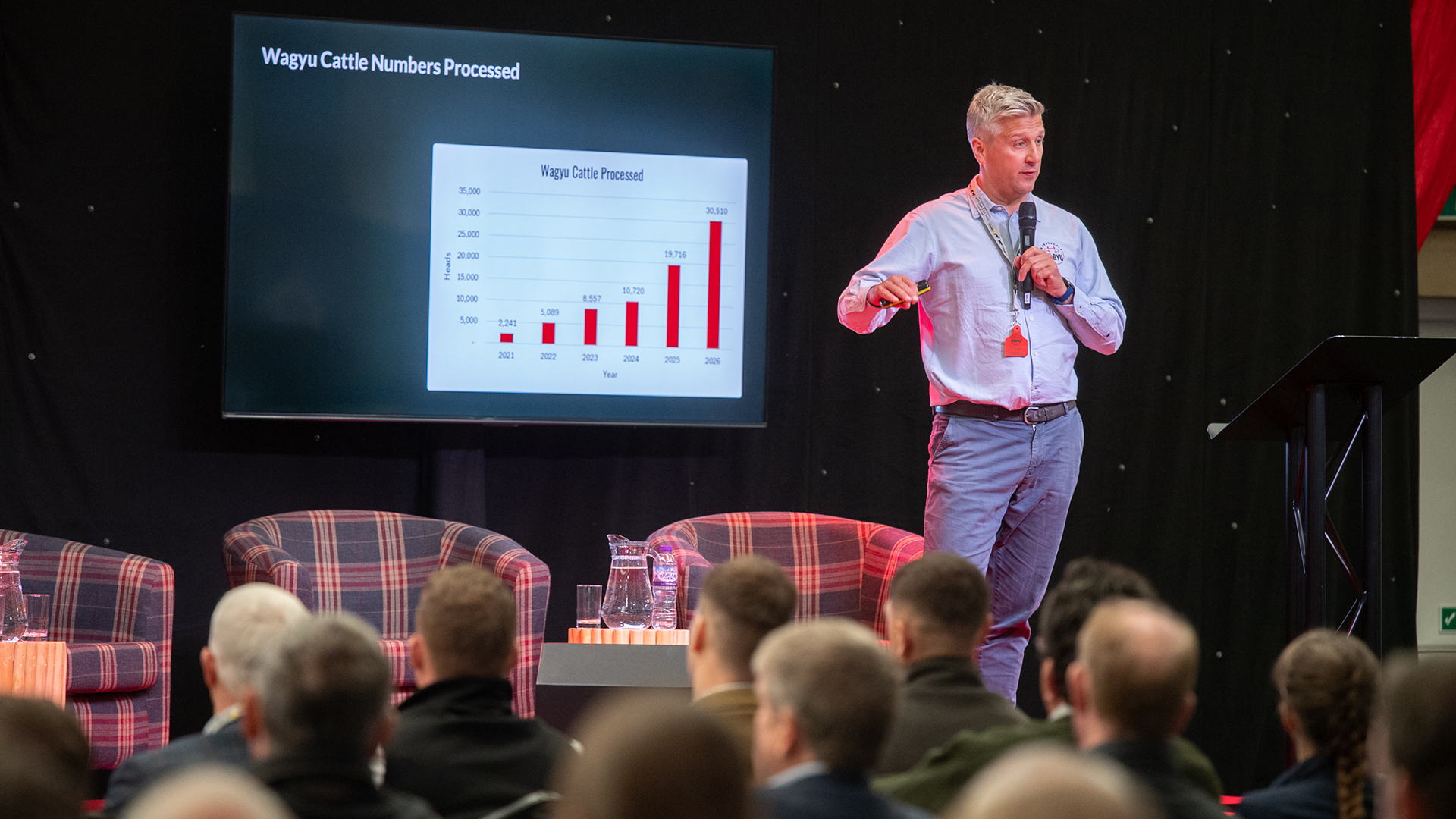
The conference's final session of day 1, Sustainable Growth – Driving Value Through the Supply Chain, focused on one of the biggest opportunities facing the British Wagyu sector: using data to improve performance, profitability and decision making across the entire production system.
WATCH NOW: Click the play button on the image below to view the whole session.

Opening the session, Warrendale Director James Thornton highlighted how the business is increasingly looking to data as the foundation for future growth. While significant progress has already been made through the collection of carcass information, he stressed that understanding what happens throughout an animal’s lifetime is equally important.
“If you look at productivity gains we’ve seen in chicken and pork over the last few decades, it’s easy to ask why they’ve moved so much faster than we have,” he explained. “Largely, it comes down to one thing – measurement.”
James outlined how Warrendale has already collected detailed information from around 38,000 carcasses, including marbling scores, ribeye area, days to slaughter and numerous other performance measures. However, he emphasised that carcass data only tells part of the story. The next step is understanding the management decisions, health events and performance indicators that influence those results.
To support this ambition, Warrendale is rolling out six monitor farms across different stages of production. These farms will be used to test products, technologies, feeding strategies and health protocols in a controlled and measurable way, helping identify the most effective and repeatable approaches to Wagyu production.
The discussion also highlighted the company’s continued investment in technology, including its Beef Herd software platform and enhanced farmer support systems. The aim is to provide producers with practical, evidence-based recommendations rather than relying on tradition or anecdotal experience.
Joining the discussion, Ian Hamilton, Warrendale CEO, reinforced the importance of the growing dataset. Drawing on his background in poultry genetics, he described the information being collected as an “incredible value” for the business and its farmer partners.
“This data set will allow us to absolutely prove every bit of the hypothesis and build up strong recommendations to help every farmer in the room make more money,” he said.
Looking ahead, Ian explained that the real value of the data lies not only in understanding what has happened, but in predicting what is likely to happen in the future. By combining genetic information with health, management and performance data, producers will be able to make better-informed decisions throughout the production cycle.
The overall message from the session was clear: sustainable growth will come from continuous improvement, objective measurement and collaboration. By turning data into practical action, Warrendale believes there is significant potential to improve efficiency, strengthen profitability and create long-term value throughout the British Wagyu supply chain.
Key takeaways
– Data will play a central role in the future development of Warrendale Wagyu, helping to replace assumptions with evidence-based decision making.
– Warrendale now has detailed data from approximately 38,000 carcasses, including marbling scores, ribeye area, days to slaughter and numerous other performance indicators.
– The business believes the beef sector can learn from the poultry and pork industries, where objective measurement and large datasets have driven significant productivity improvements.
– Six new monitor farms will be established across the production system to trial products, technologies, feeding strategies and health protocols.
– The aim is to identify the most effective and repeatable methods of producing Wagyu cattle and share those findings across the producer network.
– Warrendale is investing heavily in digital infrastructure, including its Beef Herd software platform, to improve data collection, analysis and farmer support.
– Future recommendations on products and management practices will be based on proven results rather than opinion or anecdotal evidence.
– Animal health was identified as one of the biggest drivers of profitability, with reducing mortality and improving performance delivering significant financial benefits.
– The long-term ambition is not simply to measure what has happened, but to use data to predict future performance and support better management decisions.
– By combining genetics, health, management and performance data, Warrendale believes there is potential to increase farmer margins by up to £200 per head over the coming years.
Read more from the Warrendale Conference here.
 GO BACK
Share News Story