


Introduction
Warrendale Wagyu operates a successful integrated dairy-bred beef scheme across the United Kingdom. With around 56,000 Wagyu-cross cattle and 700 farmer-suppliers within its supply chain, we are always looking for ways to improve our production. Net margins increased from the year 2024 to 2025, however, there are improvements to have.
A significant portion of on-farm expenses includes fertiliser and labour. Here we discuss practical strategies for managing these costs without compromising productivity.
Managing fertiliser costs
Grass yields and quality are instrumental in beef production because liveweight gain is constrained by feed energy supply (1). Regular and precise assessment of grass quantity and quality helps maximise utilisation and pasture productivity (2).
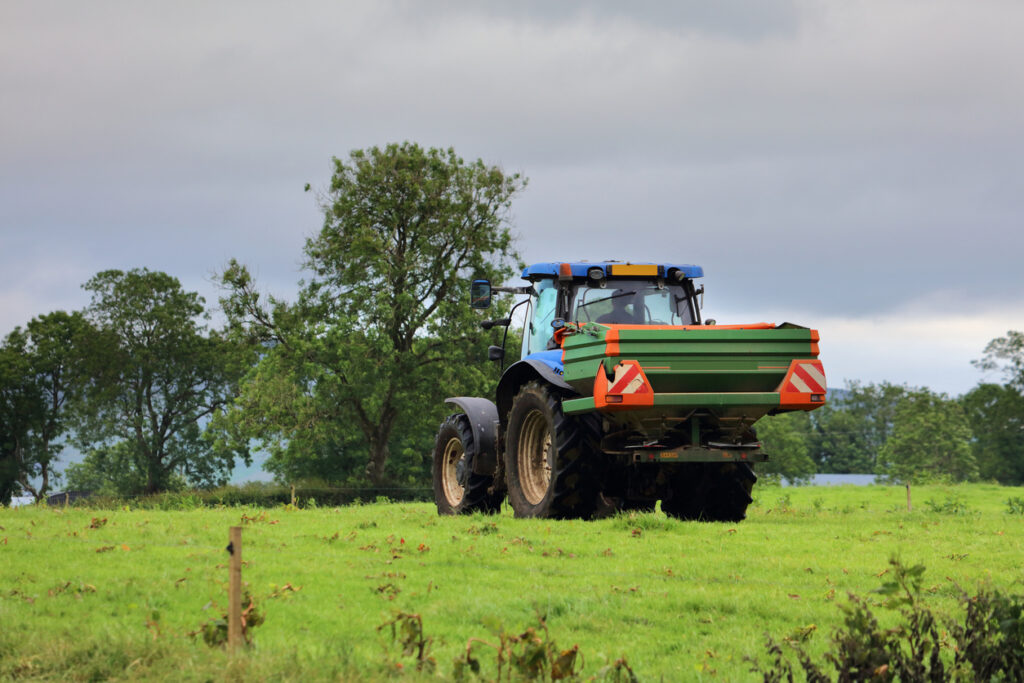
While optimal fertiliser use supports grass growth, UK regulations restrict nitrogen application. In nitrate vulnerable zones (NVZs), limits include 170 kg nitrogen/ha from livestock manure annually and 250 kg total nitrogen from organic manures within any 12-month period per hectare (3). These constraints reinforce the importance of efficient nutrient management.
Organic fertilisers such as manure and slurry supply valuable nutrients to the soil but are often applied unevenly across fields. Inorganic fertilisers are usually applied uniformly although variation can still occur due to field accessibility and topography (1).
Timing is critical to fertiliser efficiency. Nitrogen should be applied shortly before peak plant uptake, with early-season nutrient availability supporting yield potential (4). Applying nitrogen fertiliser in early spring and phosphorus in spring improves nitrogen use efficiency (5).
Understanding fertiliser needs
Regular soil and pasture testing enables more precise nutrient application. Grazed grassland generally requires less nitrogen because livestock excreta recycle nutrients. Applying fertiliser only where required improves efficiency, reduces costs, and limits environmental losses. Degraded grassland reduces productivity, soil carbon sequestration and biodiversity as well as increasing nitrogen leaching and ruin off (6). So, healthy grasslands are more efficient.
Grassland composition also influences fertiliser requirements. Mixed grass-legume swards enhance nutrient use efficiency and reduce nitrogen fertiliser needs through biological fixation. Maintaining appropriate soil pH (pH 5-6) further improves nutrient availability (7).
There are many different methods for measuring grass biomass. Conventional methods such as cut-and-weigh, transects, and rising plate meters are low-cost but labour-intensive and prone to sampling bias.
Precision technologies including near-infrared spectroscopy and sensor-based systems (e.g. LiDAR and hyperspectral sensing) provide rapid measurements, although adoption can be limited by cost and calibration challenges (2).
Soil testing is generally recommended every 4–5 years (although under Wales’ SFS scheme, 20% of the farm must be tested annually (8)). Fertiliser and manure application can influence results for up to 12 weeks, so testing should be scheduled accordingly. Nutrient distribution often varies across fields, with phosphorus deficiency more common in wetter upland soils and clover particularly sensitive to shortages (9).
Efficient fertiliser application
The timing of fertiliser application is crucial to maximise efficiency and minimise costs. The following should be considered (10):
- Soil temperature above 5oC during active growth and for maximum uptake
- Avoid application during or before heavy rains to avoid leaching
- Apply during critical growth stage of the grass (February to March)
- Calculate application based on soil tests to avoid over-applying
- Comply with regulations (e.g. NVZs)
For slurry, combining spring application with low-emission spreading techniques such as trailing shoe systems reduces nitrogen losses and improves crop uptake (11).
Precision agriculture can further reduce fertiliser costs. Variable-rate application technologies use satellite, drone, or in-field sensors to detect nutrient requirements and create application maps, enabling fertiliser application only where needed (12).
Alternative Strategies
With fertiliser prices often volatile, complementary approaches can reduce reliance on purchased nutrients. Incorporating legumes, establishing mixed swards, and adopting rotational grazing all improve soil fertility and nutrient cycling. Routine pasture assessment ensures fertiliser is applied strategically rather than routinely.
Managing Labour Costs
Optimising workforce allocation
Improve labour efficiency by identifying peak workload periods and planning accordingly. Task scheduling and cross-training staff increase flexibility, reduce reliance on additional labour, and minimise contractor costs. Automation can also improve farmer wellbeing through reduced fatigue and fewer repetitive tasks (13).
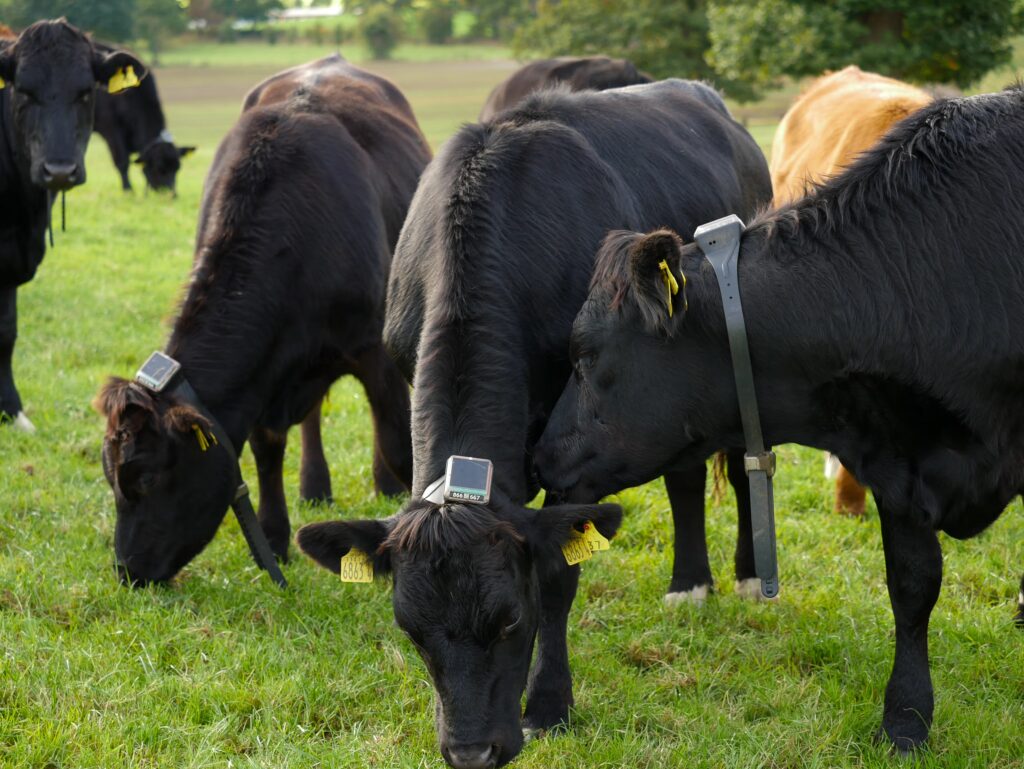
Virtual collars can be a useful way of reducing labour in terms of electric fencing or rotations. Image courtesy of Monil.
Mechanisation and technology
Utilising machinery for feeding, fencing and animal handling can enhance labour efficiency. Automation can replace repetitive tasks requiring little skill and high workloads (14). Although automatic feeding systems are rarely used in beef systems, they can reduce workload and improve animal welfare (14).
Emerging technologies offer further savings. Virtual fencing systems using GPS-based control can reduce fencing labour while improving grazing management, natural resource management and data collection (15). Additionally, sensor-based monitoring technologies enable early disease detection through gait, temperature, and behavioural tracking, reducing labour associated with manual observation.
Conclusion
Reducing fertiliser and labour costs on beef farms requires a combination of improved nutrient management, pasture monitoring, and strategic technology adoption. Precision fertiliser use, soil testing, mixed swards, and efficient slurry application can lower input costs without compromising productivity. At the same time, better workforce planning, mechanisation, and digital tools can improve labour efficiency and farmer wellbeing. By integrating these approaches, UK wagyu beef producers can enhance profitability while supporting environmental sustainability and long-term system resilience.
References
- Higgins, S., Schellberg, J. and Bailey, J.S., 2019. Improving productivity and increasing the efficiency of soil nutrient management on grassland farms in the UK and Ireland using precision agriculture technology. European Journal of Agronomy, 106, pp.67-74.
- Murphy, D.J., Murphy, M.D., O’brien, B. and O’donovan, M., 2021. A review of precision technologies for optimising pasture measurement on Irish grassland. Agriculture, 11(7), p.600.
- UK Government (2024) Using nitrogen fertilisers in nitrate vulnerable zones. Found at: https://www.gov.uk/guidance/using-nitrogen-fertilisers-in-nitrate-vulnerable-zones Accessed on: 22.2.26
- Jones, C., Olson-Rutz, K. and Dinkins, C., 2011. Nutrient uptake timing by crops. Montana, USA: Montana State University.
- Walsh, S., Bonnard, L., Ruelle, E., O’Donovan, M., McKay, Z.C. and Egan, M., 2024. The effect of nitrogen and phosphorus fertiliser application rate and strategy on herbage production and nitrogen response in spring. Irish Journal of Agricultural and Food Research, 63(1), pp.43-53.
- Horn, J. and Isselstein, J., 2022. How do we feed grazing livestock in the future? A case for knowledge‐driven grazing systems. Grass and Forage Science, 77(3), pp.153-166.
- Ros, M.B., Koopmans, G.F., van Groenigen, K.J., Abalos, D., Oenema, O., Vos, H.M. and van Groenigen, J.W., 2020. Towards optimal use of phosphorus fertiliser. Scientific Reports, 10(1), p.17804.
- NFU (2023). NFU Cymru Briefing. Found at: https://www.nfu-cymru.org.uk/media/ffqb0blc/briefing-sustainable-farming-scheme-keeping-farmers-farming-december-2023.pdf Accessed on: 22.2.26
- FAS (2019) Found at: https://www.fas.scot/downloads/tn726-fertiliser-recommendations-for-grassland-scotland/ Accessed on: 22.2.26
- Nutrinorm (n.d.) Essential guide to spring fertiliser application to boost crop nutrition. Found at: https://nutrinorm.co.uk/fertilisers/spring-fertiliser-application-guide/ Accessed on: 22.2.26
- Bourdin, F., Sakrabani, R., Kibblewhite, M.G. and Lanigan, G.J., 2014. Effect of slurry dry matter content, application technique and timing on emissions of ammonia and greenhouse gas from cattle slurry applied to grassland soils in Ireland. Agriculture, ecosystems & environment, 188, pp.122-133.
- AHDB (n.d.) Variable-rate nitrogen application to reduce emissions. Found at: https://ahdb.org.uk/knowledge-library/variable-rate-nitrogen-application-to-reduce-emissions Accessed on: 22.2.26
- Thompson, N.M., Bir, C., Widmar, D.A. and Mintert, J.R., 2019. Farmer perceptions of precision agriculture technology benefits. Journal of Agricultural and Applied Economics, 51(1), pp.142-163.
- Romano, E., Brambilla, M., Cutini, M., Giovinazzo, S., Lazzari, A., Calcante, A., Tangorra, F.M., Rossi, P., Motta, A., Bisaglia, C. and Bragaglio, A., 2023. Increased cattle feeding precision from automatic feeding systems: considerations on technology spread and farm level perceived advantages in Italy. Animals, 13(21), p.3382.
- Hoag, D.L., Reuter, R., Mooney, D.F., Vitale, J., Ritten, J., DeLay, N., Evangelista, P.H. and Vorster, A., 2025. The economic fundamentals of virtual fencing compared to traditional fencing. Rangelands, 47(1), pp.92-101.


