


News
27th Jun 2026
What Global Beef Markets Mean for UK Wagyu Farmers in 2026
What Global Beef Markets Mean for UK Wagyu Farmers in 2026
The message coming out of this year’s AHDB Red Meat Export Conference was clear: while global beef markets are changing rapidly, the outlook for premium British beef remains encouraging.
Alongside discussions around trade with Europe and the United States, industry experts examined how global production, consumer demand and international trade are reshaping opportunities for British beef over the coming years. (AHDB)
For Warrendale Wagyu farmers, many of these trends reinforce why producing high-quality, differentiated beef has never been more important.
A Tightening Global Beef Supply
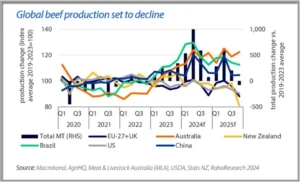
Across most of the world’s major beef-producing regions, cattle numbers are falling.
Production is forecast to decline during 2026 in:
- China (down 4–5%)
- Brazil (down around 4%)
- United States (down around 2%)
- Europe (down 2–3%)
These reductions are the result of several years of herd dispersal, weather pressures, disease challenges and increasing regulatory costs.
Australia is currently the exception. Record cattle numbers have allowed production to expand by around 4%, helping fill some of the gap left by declining output elsewhere. However, with El Niño now developing, even Australia’s growth may become more constrained in the years ahead.
The overall picture is one of tightening global supply against relatively resilient demand. While beef production remains high by historical standards, supplies are becoming increasingly limited, supporting stronger market prices across many regions.
Trade is Becoming Increasingly Complex
The conference highlighted that international beef markets are now influenced as much by politics as by production.
Several developments are reshaping global trade:
- Continued uncertainty around US-China trade relations.
- China’s safeguard quota system limiting beef imports.
- Ongoing discussions around the EU-Mercosur trade agreement.
- New opportunities arising through agreements such as CPTPP.
Rather than moving freely, beef is increasingly being redirected by trade policy, tariffs and market access.
For exporters, flexibility and access to multiple markets have become critical.
Europe Remains the UK’s Most Important Customer
Despite growing interest in markets further afield, AHDB made it clear that Europe remains the cornerstone of UK red meat exports.
The EU continues to offer:
- Established customer relationships
- Geographic proximity
- Efficient logistics
- Strong demand for high-quality British beef
AHDB also confirmed that securing improved trading arrangements through a future UK-EU SPS Agreement remains a major priority, helping reduce friction for exporters and strengthening competitiveness within our closest market. (AHDB)
Premium Markets Are Driving Future Growth
While Europe remains essential, the strongest long-term growth opportunities are expected elsewhere.
Asia
Growing populations, rising incomes and expanding middle classes continue to increase demand for premium imported protein.
Consumers increasingly value:
- Food safety
- Provenance
- Traceability
- Consistent eating quality
These are all areas where British beef—and particularly Wagyu—has a strong story to tell.
North America
Rather than competing on volume, the opportunity in the United States is centred on premium products.
High-quality British beef with clear provenance and sustainability credentials can command premium prices within specialist retail and foodservice sectors.
Middle East and North Africa
Rapid population growth combined with limited domestic beef production means the region is expected to become increasingly reliant on imported beef over the next decade.
Demand is likely to continue growing for premium imported products.
Why This Matters for Warrendale Wagyu Farmers
Global commodity markets influence every cattle producer, but premium beef businesses often benefit most when supply becomes tighter.
As overall beef availability declines, buyers increasingly compete for cattle that deliver:
- Exceptional eating quality
- Reliable marbling
- Full traceability
- Strong welfare credentials
- Consistent year-round supply
These are exactly the characteristics that have helped establish British Wagyu as a premium product.
While commodity beef markets remain volatile, demand for differentiated beef is proving more resilient, particularly in premium retail and hospitality sectors.
Quality Will Continue to Drive Value
One of the strongest messages from the conference was that export success depends on more than simply producing beef.
International buyers are increasingly purchasing a story alongside the product.
British production standards, environmental stewardship, animal welfare and full traceability continue to differentiate UK beef in global markets. AHDB’s continued investment in promoting the “Quality Meat from Britain” brand across Europe reflects this strategy. (AHDB)
For Warrendale Wagyu farmers, this reinforces the importance of maintaining the consistency, quality and provenance that underpin premium market returns.
Looking Ahead
Although global trade remains uncertain, the fundamentals for premium beef appear positive.
Shrinking cattle herds across much of the world are expected to keep supplies tight, supporting stronger beef prices through 2026. At the same time, long-term demand growth is expected to come from Asia, the Middle East and premium export markets where British beef enjoys an excellent reputation.
For UK Wagyu producers, these trends underline the value of producing cattle that meet the highest standards of eating quality, consistency and traceability.
In an increasingly competitive global marketplace, quality is likely to become an even more valuable currency.
 GO BACK
Share News Story


