


Conference Highlights: Feeding the Future – The Role of Premium Protein
News
18th Jun 2026
Conference Highlights: Feeding the Future – The Role of Premium Protein
The conference's nutrition and food policy session explored an increasingly important question for the livestock sector: what role will premium protein play in feeding future generations?
Chaired by Richard Saunders of the British Wagyu Association, the session brought together nutritionist Dr Carrie Ruxton and food policy expert Professor David Barling, to discuss the relationship between human health, nutrition, food security and sustainable food production.
WATCH NOW: Click the play button on the image below to view the whole session.
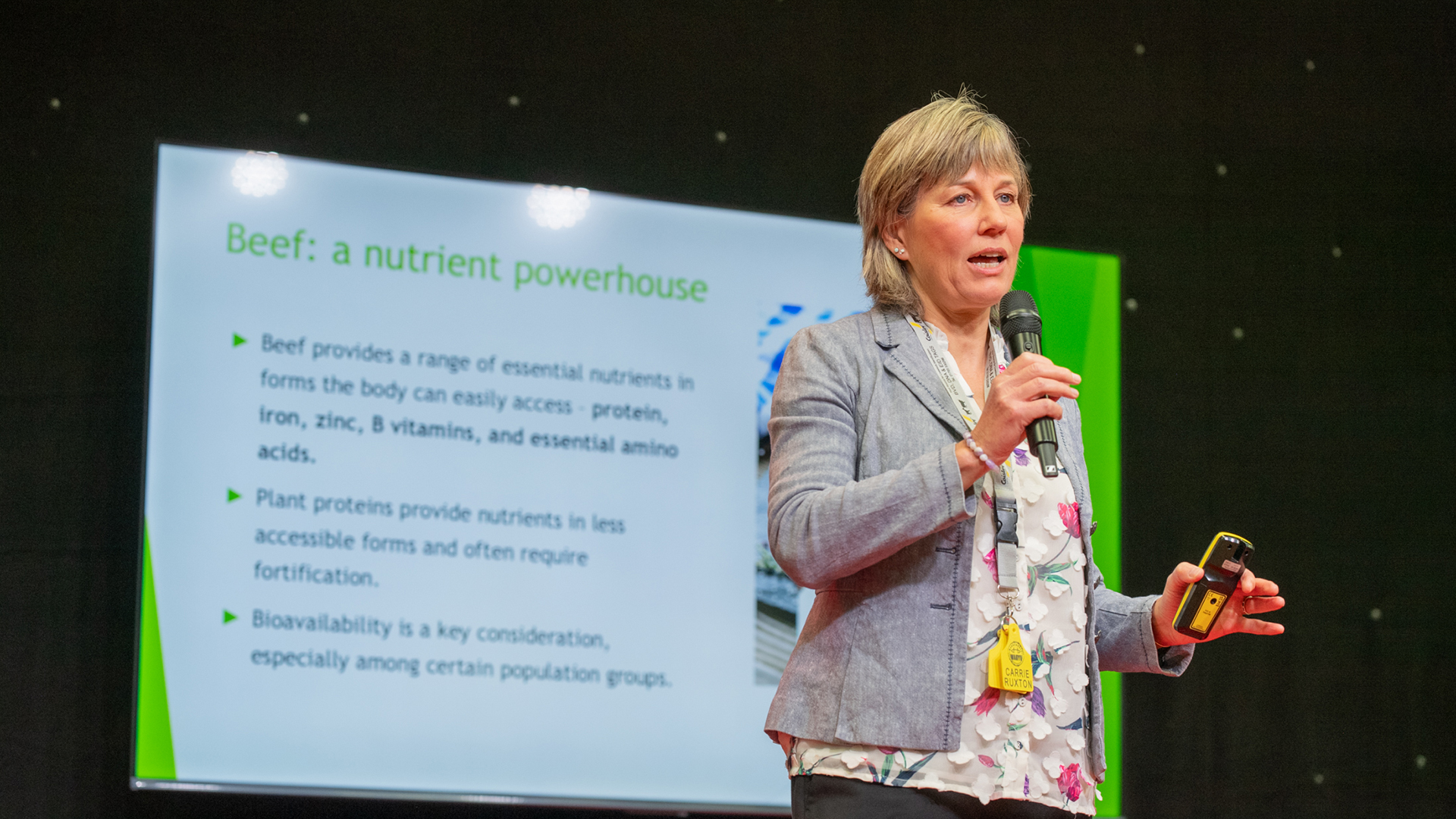
Opening the session, Dr Ruxton challenged delegates to rethink some of the common narratives surrounding red meat. Describing beef as “a healthy food” that is “very, very nutrient rich”, she highlighted its contribution not only as a source of high-quality protein, but also as a provider of essential vitamins, minerals and beneficial fatty acids.
A central theme of her presentation was protein quality. While protein is often associated with muscle building, Dr Ruxton explained that it plays a much broader role in supporting immune function, tissue repair, hormone production and healthy ageing. Importantly, animal proteins provide all nine essential amino acids required by the body and score highly for digestibility and bioavailability.
“The reason animal proteins are so special is not just because they have the whole nine amino acids,” she explained, “but also because they contain leucine,” an amino acid that plays a key role in stimulating muscle protein synthesis.
Dr Ruxton also questioned whether current UK protein recommendations are sufficient for active individuals, older adults and those undertaking physically demanding work. For many people, she argued, higher protein intakes may be beneficial in maintaining health and muscle mass throughout life.
The discussion then turned to wagyu beef itself and the science behind its unique fat profile. Dr Ruxton highlighted research showing that much of Wagyu’s marbling consists of monounsaturated omega-9 fatty acids – the same type of fat found in olive oil. Referencing published studies, she explained that Wagyu consumption had been associated with increased levels of HDL (“good”) cholesterol without negatively affecting LDL (“bad”) cholesterol.
While she stressed that further research is needed, the findings suggest there may be opportunities to better understand and communicate the nutritional characteristics of Wagyu beef.
Professor David Barling broadened the discussion by examining the wider food policy landscape, focusing on the challenge of balancing nutrition, sustainability and food security. As governments and consumers increasingly scrutinise how food is produced, he argued that policy decisions must be grounded in evidence and recognise the important role livestock production continues to play within resilient food systems.
The session concluded with a positive outlook for premium beef. As consumers become increasingly interested in protein, nutrient density and food provenance, British Wagyu is well positioned to contribute to future conversations around health, sustainability and the role of high-quality food in modern diets.
Key Takeaways
• Beef remains one of the most nutrient-dense foods available, providing high-quality protein alongside essential vitamins, minerals and fatty acids.
• Wagyu’s unique fat profile offers an opportunity to communicate a more nuanced conversation around red meat and dietary fats.
• Wagyu’s marbling consists of monounsaturated omega-9 fatty acids, the same type of fat found in olive oil.
• Growing consumer interest in health, fitness and protein-rich diets presents a significant opportunity for premium beef products.
• Food policy continues to face the challenge of balancing three competing priorities: environmental sustainability, healthy diets and food security.
• British wagyu is well positioned to benefit from increasing consumer demand for premium, nutrient-dense foods with strong provenance and quality credentials.
Read more highlights from the Warrendale Conference here.
 GO BACK
Share News Story